Multiple Deck Sizer MDS
Efficient classification with small Footprint


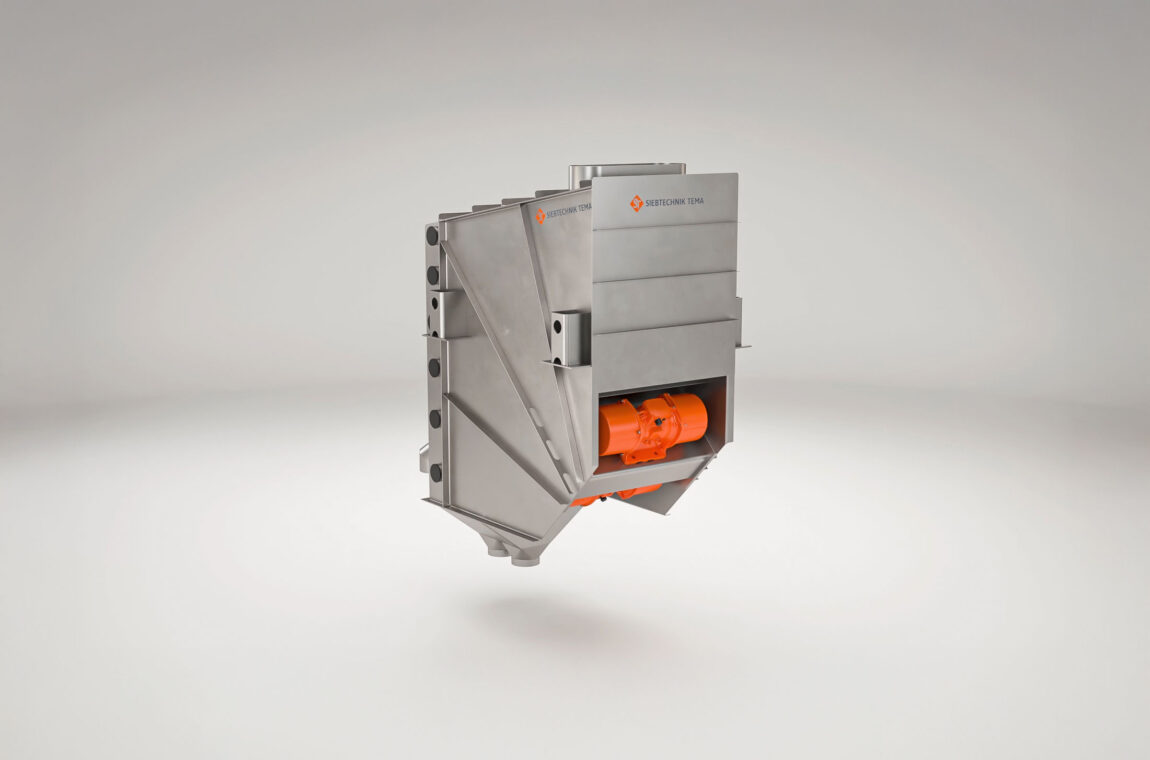
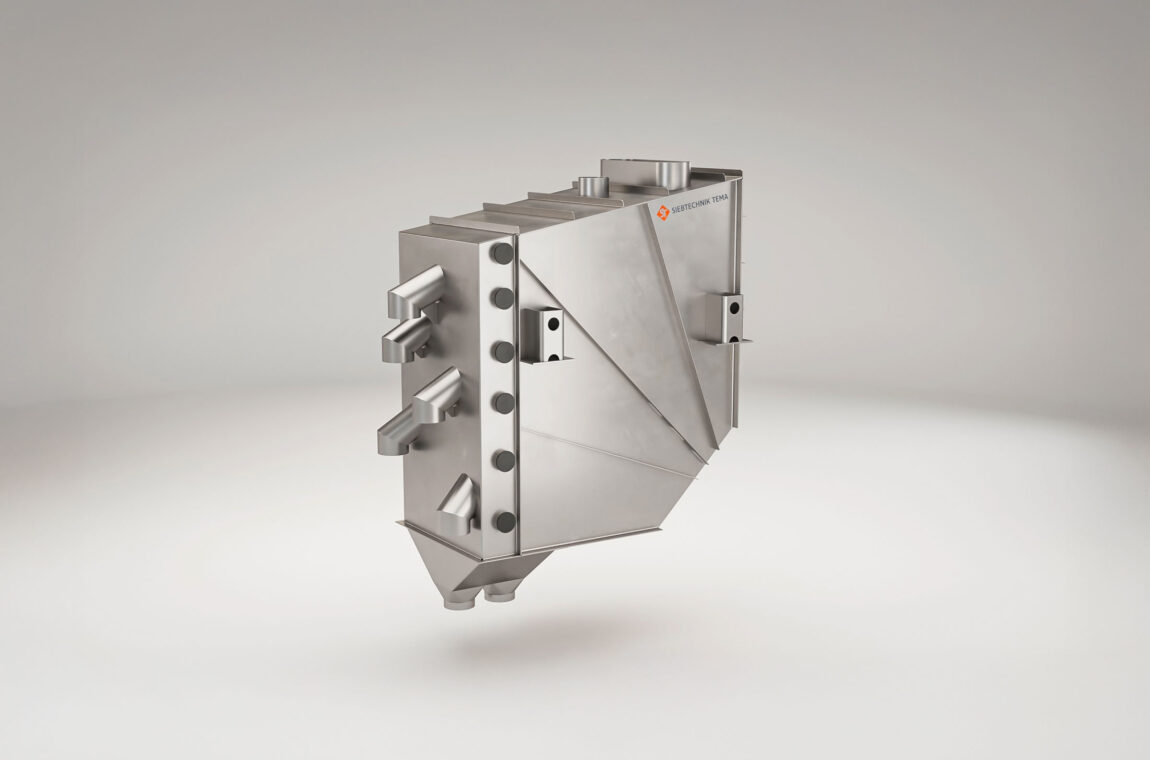
The Multiple Deck Sizer is based on a proven sizer principle that SIEBTECHNIK has further developed and combined with a modular machine concept. The focus is on adapting the machine to different separation tasks and providing maintenance-friendly components.
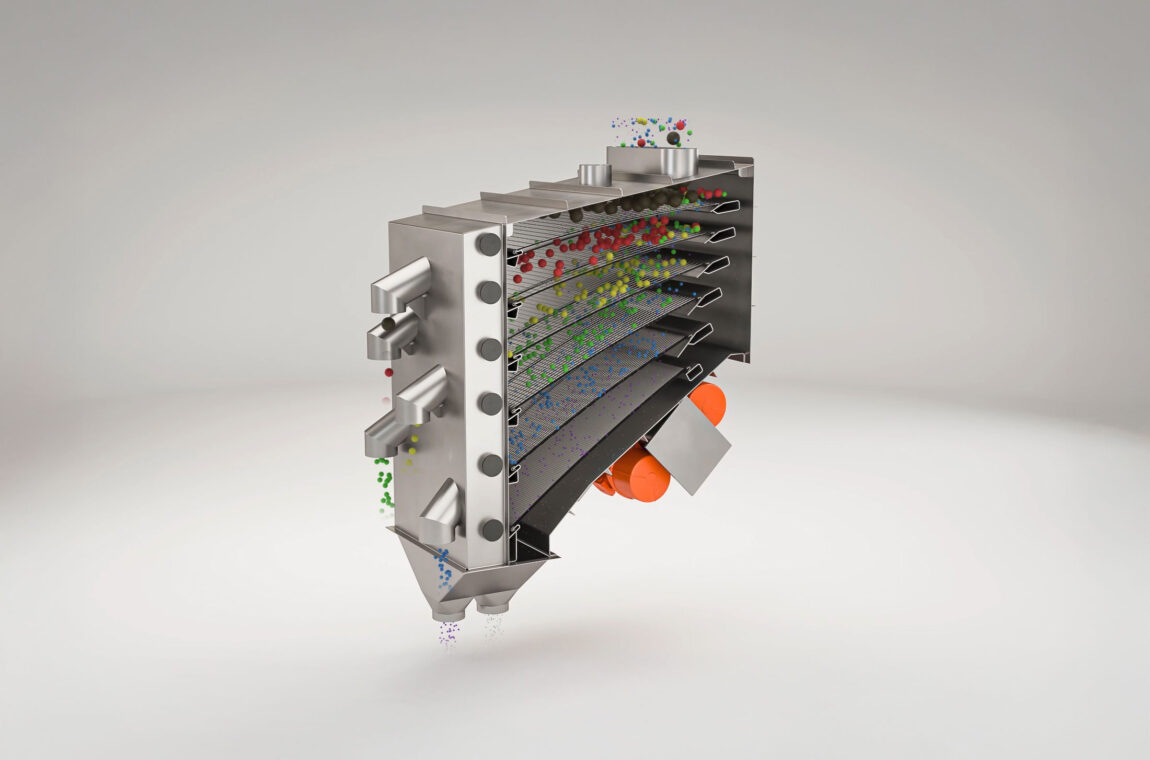
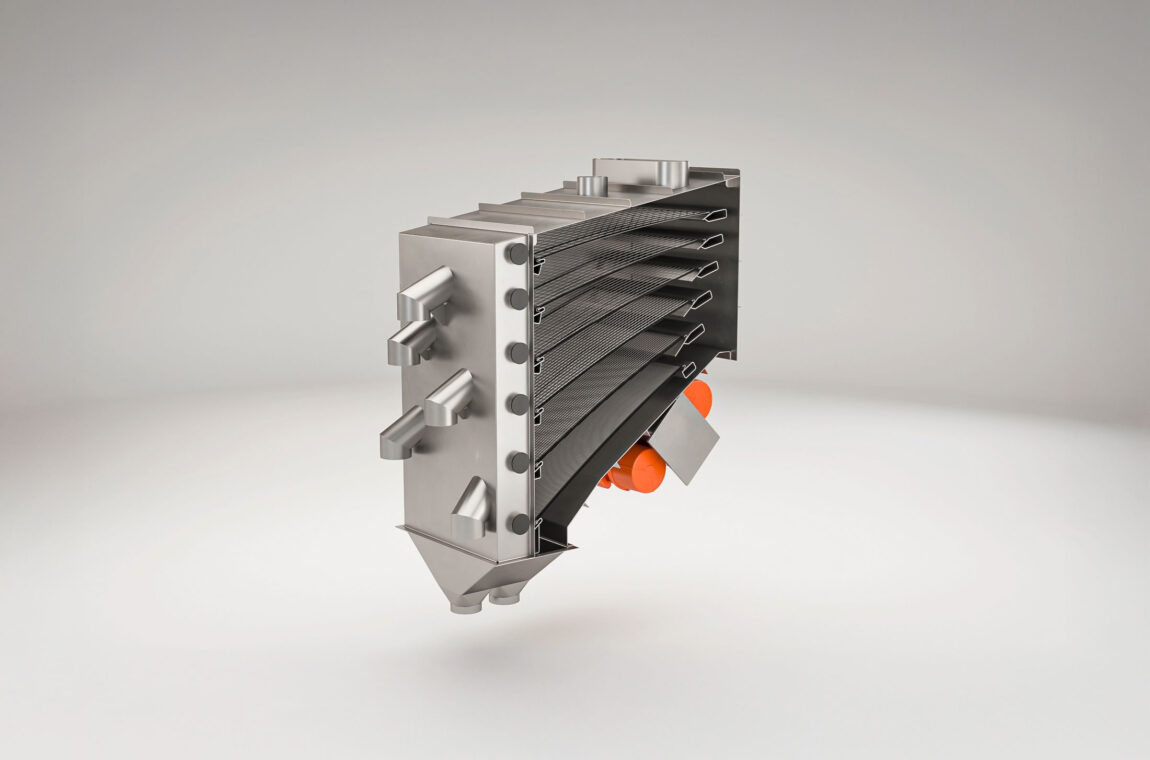
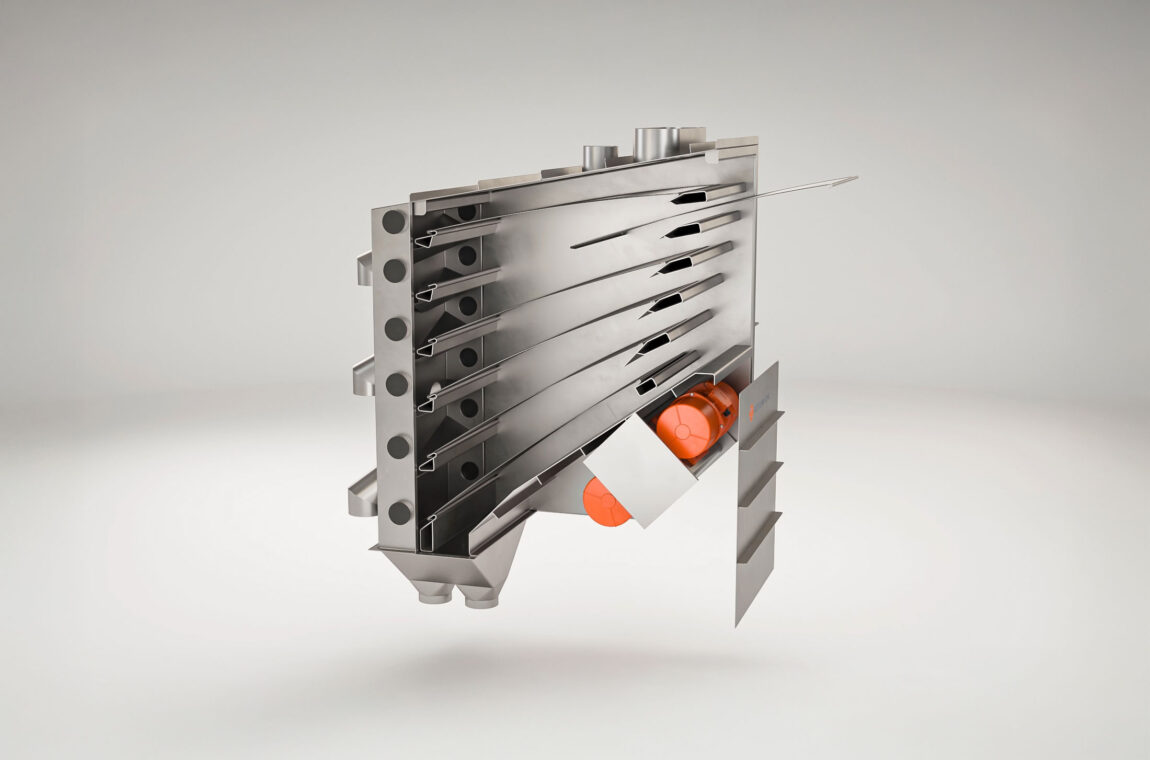
Multiple screen decks arranged one above the other at different inclinations provide a large screening area while requiring comparatively little space. This makes the MDS suitable for both new plants and applications with limited installation space.
The short residence time of the material results in a low material volume inside the machine. As a result, large-volume fines hoppers are not required. Feed and discharge connections can be sized to suit the material being processed.
The compact machine design can also reduce the engineering effort required to integrate the MDS into the plant.
The feed material enters the machine through a feed inlet and, where required, is evenly distributed across the screen width by a distribution chute. The linear-motion vibration transports and loosens the material on the inclined screen decks. As the material passes across the individual screen decks, it is progressively classified by particle size and discharged through the designated outlets.
Distributing the material across multiple screen decks keeps the material layer relatively thin. This thin-layer screening promotes contact between the particles and the screen surface and allows the material to move with minimal interference between individual particles. As the material passes over the upper decks, it is further loosened, allowing agglomerates to break apart at an early stage. This helps reduce adhering and entrained fines, resulting in less undersize material in the oversize discharge.
A key feature of the MDS principle is the use of larger screen apertures relative to the respective cut size. This provides a higher percentage of open screen area, which supports high throughput. At the same time, the tendency of near-size particles to become lodged in the screen openings is reduced.
The resulting freedom of particle movement enables a short residence time inside the screening machine. This helps protect both the material and the screen media while keeping the volume of material inside the machine low.
We tailor deck inclinations, mesh sizes, screen media, and vibration parameters to the product, throughput, particle size distribution, and required separation cuts. The achievable screening result depends, among other factors, on particle shape, moisture content, and uniform feeding.
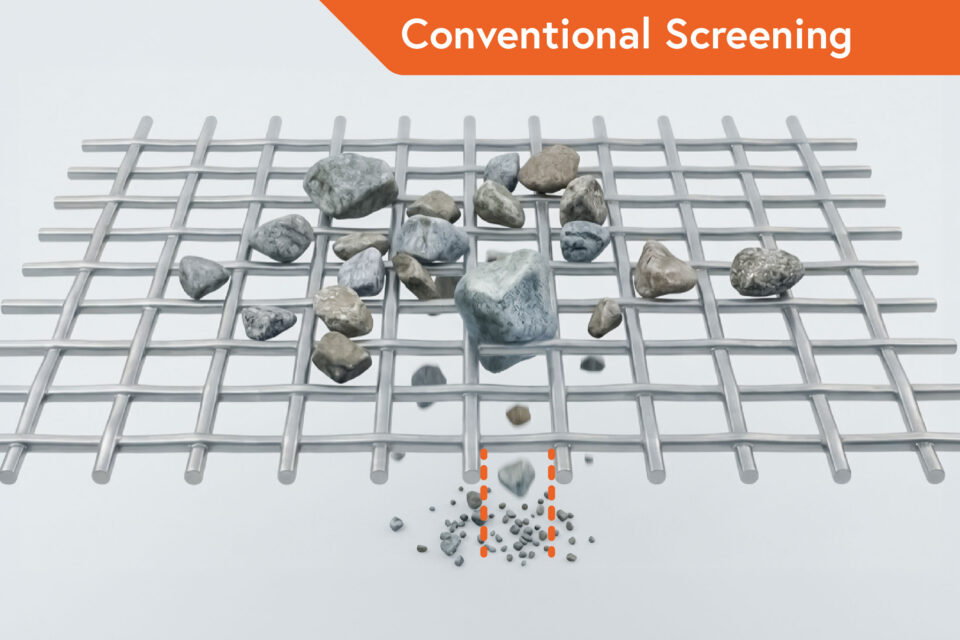
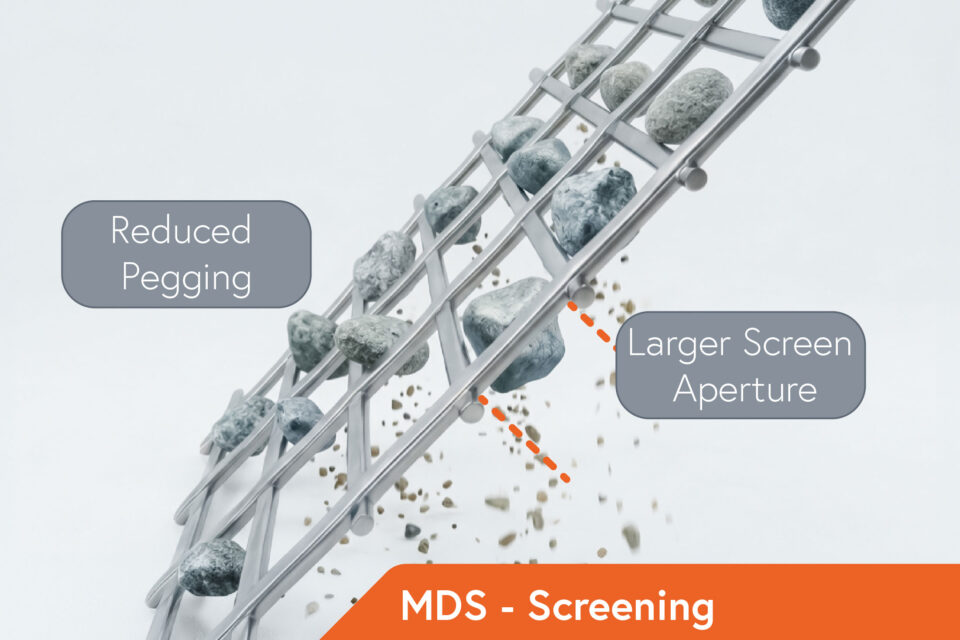
The MDS configuration is based on the specific separation task and the requirements for installation, operation, and product quality.
Estás viendo un contenido de marcador de posición de Predeterminado. Para acceder al contenido real, haz clic en el siguiente botón. Ten en cuenta que al hacerlo compartirás datos con terceros proveedores.
Más informaciónFor dry food products and animal feed, we evaluate a welded design with stainless steel product-contact components. The design takes accessibility and cleanability into account. Any additional hygiene requirements are evaluated on a project-specific basis.
Covers, sealed transitions, and extraction connections support low-dust integration into the plant. We define the required design and interfaces to the extraction system together with the customer. For applications in potentially explosive atmospheres, we evaluate the requirements for the machine and drives based on the product and the customer’s explosion protection concept.
Whether and how effectively a bulk material can be classified depends, among other factors, on particle shape, moisture content, bulk density, feed rate, material temperature, and particle size distribution. These factors also influence the achievable screening result.
Based on your product data and a representative material sample, we evaluate the application requirements and size and configure the MDS for your specific application. For demanding applications, tests at the SIEBTECHNIK Technology Center can provide an additional basis for machine sizing. We coordinate the scope and availability of testing with you in advance.
SIEBTECHNIK TEMA supports MDS operation with technical consulting as well as suitable spare and wear parts. We tailor inspections, maintenance, training, and retrofit options to the machine and its specific application.

Se utilizan tecnologías modernas para recuperar componentes valiosos de la escoria de sales de aluminio. En particular, nuestras centrífugas de empuje SHS, las centrífugas de tamiz helicoidal CONTURBEX y los decantadores se utilizan con éxito en las distintas etapas del proceso.

El sulfato de amonio se utiliza principalmente como fertilizante nitrogenado en la agricultura. También tiene muchas otras aplicaciones específicas, como aditivos alimentarios y en el tratamiento del agua potable.

El polietileno, o PE para abreviar, es el termoplástico más utilizado en nuestra sociedad y una parte esencial de la vida moderna.
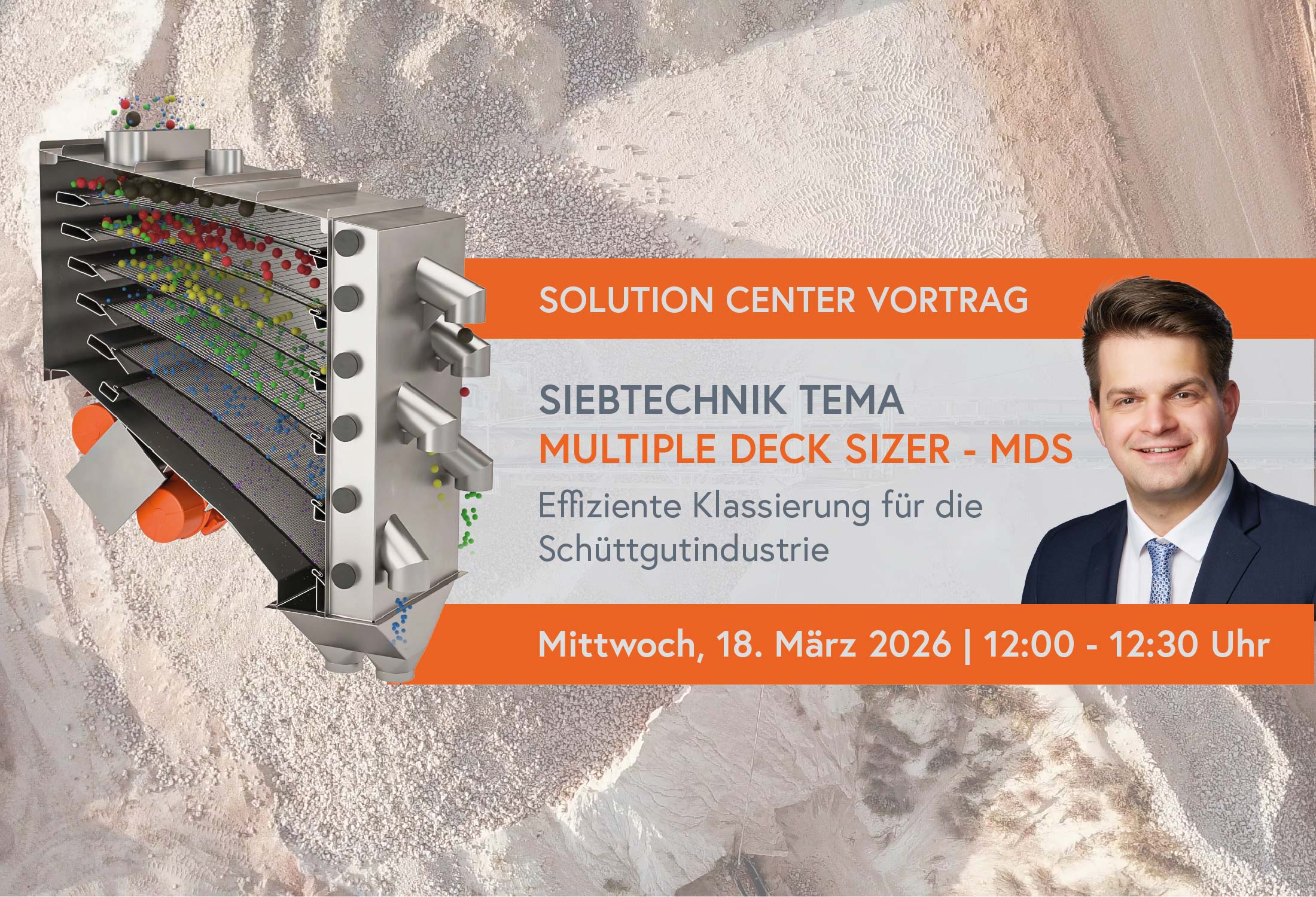
Now streaming: Watch the SIEBTECHNIK TEMA SOLIDS presentation on the Multiple Deck Sizer (MDS). Discover how advanced thin-layer classification delivers unmatched efficiency and separation precision for bulk materials. Watch the recording now!

Nuestra máquina de cribado de múltiples pisos se utiliza como criba de control o de clasificación para materiales a granel de flujo libre, secos o granulares.

Nuestra máquina de cribado de movimiento lineal se utiliza para cribar y deshidratar materiales granulares a granel. Con estas máquinas es posible cumplir incluso con requisitos extremos, altas temperaturas y bajos niveles de humedad residual.


Tenemos la solución adecuada para cada tarea. Y, si no la tenemos, trabajaremos contigo para encontrar una. ¡Ponte en contacto con nosotros!
Nuestros especialistas estarán encantados de asesorarte de manera individual, en sitio o de forma remota, y están disponibles para responder cualquier pregunta que puedas tener. Envíanos un mensaje mediante nuestro